Categories
Coaching Leadership

Coaching for Performance

This is a long overdue look at one of the fundamental texts of the coaching and leadership field, Coaching for Performance. It’s the book that introduces you to the GROW model, and builds the basic theory of coaching around this tool.

It takes you through a journey of understanding, starting with defining coaching and how taking a coaching approach will help create high performing teams and organisations.

Part two builds lays out the principles of coaching, taking you through Emotional Intelligence, coaching as a leader and how coaching builds partnership and collaboration.

Part three moves into the practices. It covers the vital skills of active listening and questioning. Then we dive deeply into GROW, with chapters dedicated to each step of the model. In part four, we look at specific applications, covering 1 to 1, team and other specific coaching areas.

Finally, we cover the potential of coaching, including measuring the return on investment, leadership qualities and effecting cultural change.

The appendices are great additional tools, a comprehensive glossary gives a short overview of every core coaching term covered in the book. The question toolkit give a wide range of powerful options and approaches to apply in many different stages of the coaching conversation.

This is a key read for anyone who wants to improve their coaching and step up to the next level. It’s approachable and well grounded, with each short chapter presenting powerful and actionable lessons. You can read it through from start to finish and then dip back in to specific sections to refresh and brush up on specifics.

It’s a book that should be read by everyone who calls themselves a coach or a leader.

Categories
Leadership

Communicating Change

When you are attempting to communicate with someone, you need to always hold on to the idea that “it’s not what you say, it’s what they hear”. Once you’ve internalised this, it gives you a chance to build the shared pool of meaning that’s required to communicate something effectively.

Communicating “change” is a whole level beyond this basic interaction. Change brings uncertainty. It will take time, and it will affect a number of people.

With these added complexities, you need to bring another skill to bear. You need to be consistent.

You will have to repeat your message many times, in many formats and to many people. A single broadcast in a single medium will not have the impact you hope for.

If you are communicating change, you will have had more time to get used to the idea, to see the benefits and to see the path forwards. Anyone new to the idea will not have this, so your first announcement will feel like a bolt from the blue.

People will react to this in different ways, excitement, shock, even anger. Be ready to refine your message and to share it in different contexts and mediums, but always hold your consistent points in the front of mind.

When you’re sick of saying it, people are starting to get it, so get your head down, craft your message and give it multiple times with consistent focus.

Categories
Coaching Leadership

Appeal to Rationality

In a difficult conversation, it’s easy to fall into the trap of appealing to rationality. When emotions are running high, especially on one side of the conversation., then you may try for a “let’s just be rational about this”.

It’s a very similar position to asking someone to “calm down”, and likely to have about the same effect. That’s ranging from nothing, to a full and final breakdown in communication.

We fall into this trap when we are less immediately impacted by the conversation. Maybe it’s one where you’ve had time to digest the contents, whereas the other party is hearing tough news for the first time.

Quite often it’ll be when the topic is incredibly important to the other party, but is less impactful to you. It’s extremely common when you confuse a lighthearted topic with one that’s truly important to the other person. That’s a difficult conversation which you didn’t realise would be difficult, which is just about the hardest kind.

Appealing to rationality, or attempting to be logical, will not work in an emotional situation (and all situations are somewhat emotional). There’s no independent arbiter doling out correct answers. No impartial judges validating your feelings over another’s. When you move to “rationality”, this external justification is exactly what you are seeking, to the detriment of the overall conversation.

When you are reaching for this conversational gambit, you may really be attempting to slow down the conversation, bringing it back to a shared pool of understanding.

If that’s the case, just go for it. Recognise the emotion, and ask to take a moment. “Can I take a second to gather my thoughts?”, “I can see that this is a really important topic for you, what else would you like to share right now?”. “I’m keen to understand more, I’m sorry I’m not there yet”.

All these are approaches to bring you towards a productive exchange of meaning, which you won’t get with a suddenly appeal to faceless authority.

Don’t waste time being rational, when you can build a lasting an powerful human connection instead.

Categories
Coaching Leadership

Space to Fail

When you are learning a new skill, or mastering a new endeavour, you must give yourself space to fail.

If a change is going to be meaningful, there will be risk of failure. However, you can reduce your overall chance of failure by giving yourself the opportunity to make small mistakes, and learn from them.

If you don’t embrace this, then you’ll turn the situation into a binary all-or-nothing. Success / Fail. Yes / No. Put in such stark terms, you may well just choose to do nothing, which is a painful way to miss out on reaching your true potential.

Rather than letting this risk become a big thing, make it small. Embrace an amount of failure as you learn. If it’s perfect first time, then you didn’t find enough to challenge yourself.

In the Build – Measure – Learn model of the Lean Startup, you find an approach that celebrates giving this space. It pushes you to iterate quickly thorough ideas, learn what works and what doesn’t, and to then refine the outcome.

You can apply this model to your own goals and the options you consider when attempting to reach them. Don’t phrase something as all or nothing. Think about the iterative steps you’ll use. How you’ll learn from things that didn’t go so well so you’ll improve the next time.

Once you’ve started, you can correct your course. Doing it little and often means that no one experience is catastrophic. You start of failing and learning, then you start to succeed and finally you are achieving at a high level.

Give yourself space to fail, and you’ll get to success far sooner.

Categories
Book Review Leadership

The Art of Leadership

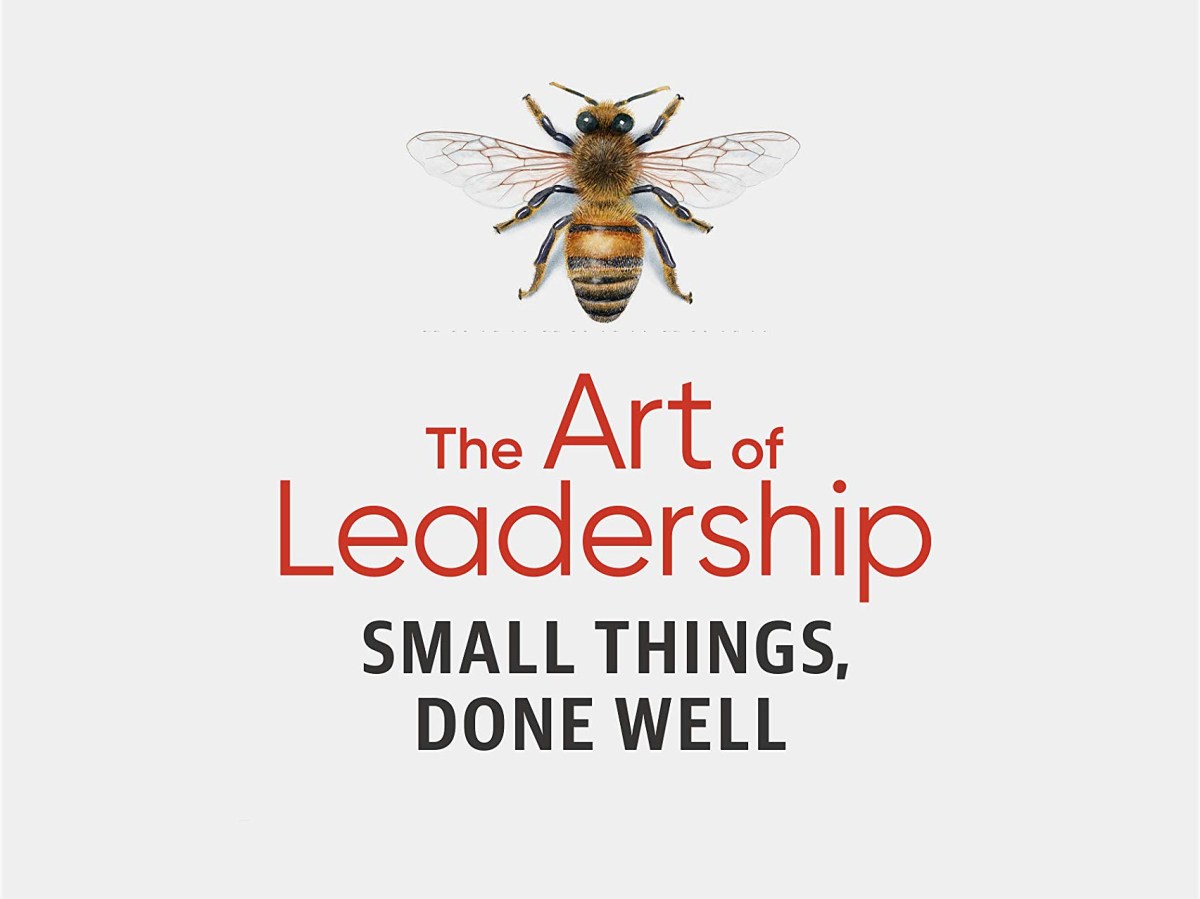
Michael Lopp’s new book has just been released. The Art of Leadership, Small Things Done Well. I’ve had it on pre-order since December, so I was very excited to get it into my hands.

It’s a collection of thirty small things you can do as a leader to build trust and respect in a team. The book is structured around three stages of leadership in organisations, a Manager, Director and Executive.

Lopp takes you through the journey from Individual Contributor, to a Manager leading a team, a Director who is leading Managers, and an Executive who’s accountable for the direction of the company. Each of the small things is especially relevant to a leader at that specific level, but is still something to keep in your toolkit as you move on to greater spans of control.

It covers pitfalls (New Manager Death Spiral) and sometimes unexpected areas of focus (when recruiting, spend an hour per day per open role). Communication is a key theme, whether that’s how to hold effective 1-2-1s, to say the hard thing or how to communicate difficult change through a large org. It recognises that you’ll be bad at each of these roles for at least a few years until you master them, so embrace failures, learn from them and growth through the experience.

If you already follow Rands, then you’ll be familiar with a lot of this content from his excellent blog. The book takes this to a next level, grouping, ordering and curating a common set of advice that is important for all leaders.

It’s a powerful book, it’s easy to read and it’s something you’ll be excited to revisit and dip back in to for years to come.

Categories
Coaching Leadership

Flywheel of Change

Flywheels store up mechanical energy, and let you use it in a different way. They are big and heavy, and hard to get going. Once up and spinning, they’ll keep going with only small and regular top-ups.

If you are attempting to drive change, either personal, organisational or societal, then much like a flywheel, starting will be the hardest thing.

A great and tumultuous effort might just be enough to nudge the wheel forwards a tiny bit, but if left there it will quickly settle down to stillness once more.

One large effort is not enough. Nor will sporadic and unplanned pushes work, too much will go into getting the turning started, rather than speeding it up.

The large push will be exhausting, but sometimes that’s worth doing to get going. To then drive the change to completion, use a strategy that builds momentum.

Find the repeatable efforts that you can maintain over the long run. Engage daily or weekly, make it a routine part of your schedule. Get to the point where it’s something you miss if you don’t do it. Setup some larger efforts, with time to plan before and recover after.

Change is hard, so be smart about building up that energy, and use it for good!

Categories
Coaching Leadership

Technology is a Creative Endeavour

I work with a large number of technologists, I build a lead teams working at significant global scale, solving problems with technology.

If you are outside of this world, it’s easy to get lost. Why is it so hard? What’s going on? Why does it take so long?

The exciting thing about technologists, and about software, is that they are constantly involved in a creative endeavour. It’s a cross between science and art, with a whole load of emotional and personal considerations thrown into the mix.

Think about how hard it can be to build a house. A dozen trades, maybe more. They follow a plan, but flex from it when difficulties arise. It’s creating something from nothing, but you’re probably following a pretty standard path. You know houses, you can see them. They’ll be used by a well known number of people, in a standard way. It’s pretty predictable, but there are still difficulties, overruns and variations from the plan.

When we’re building software, we have some of that certainty, but not the majority. We may not be sure what the problem is we’re solving. Will it be used by ten people or ten million? Who’s going to try and break it, and what if we get half-way done and decide to do something else?

If you are leading a tech team for the first team, part of a digital transformation or an agile experiment, it can be bewildering. Engineers, computers and logic suggest predictability, certainty and rigid planning.

Instead, stop and reflect. If it’s worth creating a new technologic solution, then it’s novel, unique and new. You can’t plan to the day, but you must let the creative process occur. Set goals, go after outcomes. Figure out ways to launch early to learn, then course correct.

Don’t look for perfect. No art is perfect. It’s done, and it’s out in the world, changing people and bringing joy.

Set expectations like this, and you’ll be an exceptional technical leader. You’ll empower people, bring real change to the world and never waste time search for misplaced certainty.

Categories
Coaching Leadership

It’s Never Just Business

What you do defines who you are. The actions you take and the options you choose are the things that define your shape in the world.

If you are ever in a situation where you are considering saying “It’s Just Business”, then take a moment and think about why you are about to do this.

When you remove yourself from the discussion in this way, then you are often attempting to shift responsibility for something away from yourself. You are suggesting that this third party, the impartial arbiter, this other, “business” is responsible, where you are not.

This is probably an emotional or difficult moment, so you may not be able to course correct in the flow the first time you notice it. If not, you can pick-up after the conversation and reflect later.

There is an emotional, personal connection in all relationships, no matter how professional they may be. If you can recognise this then you can empathise with the other person in the conversation and build a more meaningful relationship, even if the news you are delivering is hard to hear or likely to disappoint them.

Don’t let it be Just Business, own your actions and you’ll be a better leader, and a better person.

Categories
Coaching Leadership

Coaching Spectrum

The spectrum of coaching approaches is presented by Miles Downey, and is an excellent way to recognise when we are being more or less directive in our approach as coaches. It is a powerful way to recognise how your interactions will shape the outcomes and determine your future effectiveness.

Non-Directive / Following Interest
Listening to Understand
Reflecting
Paraphrasing
Summarising
Asking questions that raise awareness
Making Suggestions
Giving Feedback
Offering Guidance
Giving Advice
Instructing
Telling
Directive

As coaches, we are pushing towards the top of the spectrum, the further up we are then the more likely we are helping a coachee find their own solutions.

As a leader, you will flex up and down the spectrum as appropriate for the situation. If something is on fire, you might ‘tell’ or ‘instruct’. It’s a situation that requires the directive approach. Afterwards, you might give feedback on how the situation was handled, and then return to a coaching posture by letting your direct report consider ways to prevent the fire happening again, while you summarise or reflect to cement their understanding and commitment to the solution.

We aim to move up the spectrum as high levels build stronger commitment and ownership of solutions from a coachee, and empowers them to solve future similar problems with their own resources.

Each step up you can take will make your coaching more effective in the long term, so look out for opportunities to jump up to the higher levels wherever you are able.


Categories
Coaching Leadership

Don’t let facts get in the way of coaching

It’s impossible to coach someone to discovers facts that they just don’t know. As a coach, you can guide a coachee through the tools and techniques they have available to discover answers, but you can’t unpick those answers themselves.

This situation most often occurs in an organisational context, or when you are applying coaching methods in a management role. The example I tend to use is a manager who’s working with a direct report and is discussing some recent annual leave. In this scenario, if the coachee does not know what the holiday policy is, then no amount of coaching will bring them to enlightenment.

In this situation, there are a couple of options. If it’s urgent, then you can choose to break out of coaching and share some information. This isn’t the ideal solution, but it can drive you past a sticky point and allow you to switch back to the coaching mode.

You can also choose to step through the coachee’s thinking, and seek to find appropriate options to empower them to discover the relevant information. In the case of policies, that may involve things like contacting HR, research on the corporate intranet or reaching out to other colleagues. Selecting one of these options and reporting back the findings might be an excellent small outcome for the coachee, which also gives them more autonomy in the future.

As a coach, watch out for the times when there is definitely a right answer. That’s the time you should pause, review the conversation and find a way forwards without getting stuck in the mud trying to bring a coachee to a factual solution they are not equipped to discover.