Categories
Coaching Leadership

70/20/10 Learning

The 70/20/10 model is a rough rule of thumb for the balance of types of learning. Whilst there’s not a lot of evidence to support it (especially the specific numbers), it’s certainly something that feels right to a lot of people.

In essence, it states that 10% of learning comes from formal training, 20% our relationships with others, and 70% from learning in practical contexts.

Anyone who’s ever learnt anything will feel this breakdown. Reading the instructions gets you going. Watching the Youtube video helps, but you only get proficient by doing the activity a number of times. Different activities will certainly have difference balances! It’s easier to master putting together flat pack furniture than complex woodworking, you need a lot more practical effort for the second.

Even if it’s not super well founded in evidence, it does have some useful points to take away.

The first is that this all needs to be deliberate effort. Just go through the motions doesn’t count. Doing a job for a long time won’t imply mastery, you need to be pushing yourself to learn.

The second is that all of the three types of learning are necessary. Sure, you might “just figure it out”, but without that formal foundation you’ll likely be going for a long time, and making some really basic mistakes you could have easily avoided.

This second point is a really key one. Sometimes people who’ve just heard the breakdown will say the 10% bit isn’t important, it’s the smallest part. Smart people know it’s foundational, and won’t try to skip it. Don’t get fobbed off with the “learn by doing” approach, you need that initial learning and then peer support before diving into the doing to be truly effective.

Again, this model isn’t super well supported with evidence, but it’s easy to remember so it’s got a lot of traction. Take what’s valuable from it, and make sure you blend all the types of learning to accelerate your growth.

Categories
Coaching

Just Starting Out

Last week I was at a career fair, and had a chance to speak to dozens of students who were just about to start out in the wider world. They had loads of great questions about software engineering and what they should be focusing on now to help land that first job. I think that’s a really interesting topic, so I wanted to share some of my thoughts on that here.

First up, you’ve got to want to do it. If the idea of writing code, figuring out problems and designing systems doesn’t excite you, then you might want to look to something else.

Next up, you’ll make sure you know how to display some of those key skills. Most early careers schemes won’t be asking for really deep knowledge of specific technologies, but they will want to see some proof of logical thinking, problem solving and something around actually coding.

Depending on the type of company that might be quite deep computer science type thinking, or it might be focused more on code to solve business problems. Target your learning and prep appropriately!

Beyond the key professional skills, the interpersonal and team skills are just as important. When we build modern software you work in a team. You don’t just sit and code, but you talk to other team members, you work across teams and you might work directly with some of your users. So make sure you are a nailing your group projects and building up experience of team based activities.

Many programmes will use technical skills demonstrations in initial rounds to set a baseline skill level, and then use the team and personal skills to select standout candidates. Don’t leave these as an afterthought!

Finally, in early careers you don’t have loads of experience, so potential is assessed even more actively. Knowing about the company you are applying for, connecting with their mission and being enthusiastic about it are real benefits. Being curious and ready to learn is another great attribute, and is the thing that will nudge you from good to great!

Early careers schemes are popular and attract massive numbers of applicants. It can feel like you need to play the numbers game to win, but if you balance your tech and personal skills, prepare with great examples of times you’ve used them and align your applications to your interests, you can jump to the front of the queue.

Categories
Coaching Leadership

Don’t force the Process

Requiring a uniformity of process caps the highest potential of your teams.

Process protects us from making mistakes, and can lift every team to a good level. Forcing this is what stops us finding the truly great performances.

We sometime fall to uniformity when we find it hard to measure the outcomes that teams are driving. Measuring adherence to a process is often easy. It’s easy to count the number of widgets that are being created, and it’s easy to see if we’re all doing it in the right way. It’s not always easy to determine if we’re doing the smart things that actually achieve the outsize results.

A classic example of a mistake is to enforce Scrum, or any other particular flavour of agile. The more tightly it’s enforced, the less likely you’ll get a 10/10 team performance.

Instead, go back to the Agile Principles. The best architectures, requirements and designs emerge from self-organising teams. At regular intervals, the team reflects on how to become more effective, then tunes and adjusts its behaviour accordingly.

An overly rigid process hinders this adjustment. It doesn’t recognise the unique context of the team, and that’s where the potential is capped.

By all means, if your org needs certain things reported, or activities that must be done for legal reasons then you can require that of the teams. Beyond those must do things, you should instead encourage your teams to experiment and find out what works best for them.

The goals of leadership in this model is to share the things that are working, and also the things that aren’t. Giving access to the tools that can support, and taking away the noise that breaks focus.

It’s imperative that you don’t just allow each team to meander through the path to excellence!

So forcing a process can take you up to good, coaching teams and sharing the best outcomes widely will help you achieve greatness.

Categories
Coaching Leadership

All Good

We use feedback to help us grow, understand what’s going well and think about areas we might be able to improve. Sometimes it feels like we’re only getting positive feedback. We get told we’re doing a great job, but there’s not much actually actionable in the content.

There’s a few different types of “All Good” feedback, and there are couple of different techniques you can use to grab some value from it. So if you feel like you’re just getting positive vibes, but are struggling a bit to progress your goals, dive in and figure out which types of feedback you are working with to let you take it to the next level.

“Good Job”

Super frustrating when you reflect on it. It’s usually an attempt at continuous feedback that doesn’t quite hit the mark. “The presentation was great”, but what about it specifically? What was a real strength, and was there anything that could have been made even stronger.

This type of feedback is real vanity metric stuff. It makes you feel good in the moment, but it doesn’t tell you any specific about what’s really going well. Lean into this opening and ask some valuable coaching questions. “What about it was great?”. “I felt that slide 7 was a bit wordy, what’s your view on that section?”. “How do you feel it landed with the Marketing team?”.

Don’t let these opportunities slip by. Even if the area is a strength you will get better faster with more targeted guidance. Otherwise it’s just like hitting golf balls blindfolded and listening for the applause.

“The quiet parts”

A real problem when you look at feedback coming from more junior people or peers you have to work with often. Even when trust is high, people will still tend to default to positive feedback, rather than leading with areas of opportunity.

If you’ve got three key areas that are important in your role and one is totally missing from your feedback, maybe reflect on why. Imagine you are great at coaching and supporting people but there’s nothing about setting strategy. That quiet part should be a concern, something to follow-up on.

Sometimes you also get some very light criticism flowing through the positive words. If you are reading just the good stuff, this can be easy to miss or gloss over. Instead, try pretending that the softness is a really hard and stark statement. Dial it up to 11 and then figure out if it’s something you want to change or do differently in future. Turn “Makes lots of contributions and suggestions” to “Stifles thoughts of others and takes all the space in the room” and see how that could drive different behaviour.

“Missing people”

A classic end of year performance problem. You’ve only got good feedback because only the people who wanted to share positive stories have decided to.

This can be because you’ve asked a sensible set of people from your stakeholder map, but as it’s easier to share the good stuff, you’ve missed out on all the people who didn’t want to do the work to share growth opportunities.

In which case, try leaning on second order feedback. Ask some trusted colleagues for their thoughts on what the missing people might be saying. Be careful to avoid straying into gossip if you do this, consider starting off by working with your manager (as they are someone who is likely to already be getting some more actionable from these missing voices), and go from there.

Consider as well the benefits of anonymous feedback. Some people will be much more likely to share something useful if it’s not directly attached to their name, especially if mediated through a standard 360 or similar process.

Alternatively, you might have missed some of those less positive stakeholders. Reflect on that map of people who are important to your now and next roles, look at where you’ve not even asked for any thoughts and go and seek them out. Maybe you’ll learn something important through taking the time to extend the reach of your search for feedback.

With any of these approaches you might suddenly get a tranche of new feedback that doesn’t meet your previous expectations. Don’t discount it because it’s different or unexpected, but make sure to take time to reflect on it, seek the useful and good from and use it to learn and grow.

“The Irrelevant”

A sneaky tactic I’ve seen used to deliver “constructive” feedback is to put the positive sounding comments in terms of what you do, but the more difficult sections in terms of what we do or what the organisation does.

If you discard the second part then you are risking doing yourself a massive disservice. “You laid out the options well, but we are not great at making decisions so haven’t moved forwards”. A quick reading is that you did a great job and someone else didn’t.

Try flipping it to “You laid out the options well but it didn’t lead to a decision being made”. How would that make you feel? Does it still feel positive, or does it suggest there’s something to try doing differently in future?

“The Last Job”

Look at the feedback you are getting, and think about the level that it reflects. Is it activities focused towards your next role, or is it all around the expectations of your current job? Even weaker, is it all about your last job?

It’s a painful problem that’s most common amongst people who’ve just been promoted. It’s all too easy to slip back into the comfortable parts of your previous job, and then get positive feedback on doing easy tasks well.

This is the hardest type of positive feedback to fix as it’s not going to get better by seeking out more feedback. Here you need to look at what you are doing, what you should be doing, the gap between the two and how you need to move from one to the other.

Similarly if you want to be promoted, positive feedback on your current role is baseline table stakes, instead work to understand the expectations of the next job, and start doing the work to be in those rooms and get feedback about those activities instead.

If it’s All Good it’s No Good

If all you are getting is positive feedback then it’s going to be really limiting to you in the long term.

Reflect on your situation and the information you’ve gathered and see which of these buckets you fall into. It might be more than one!

Put together an action plan and go out and fix it.

If you aren’t learning you are falling behind, so don’t sit overconfidently on the good stuff. Seek out opportunities as they won’t be handed to you!


Categories
Book Review Coaching Leadership

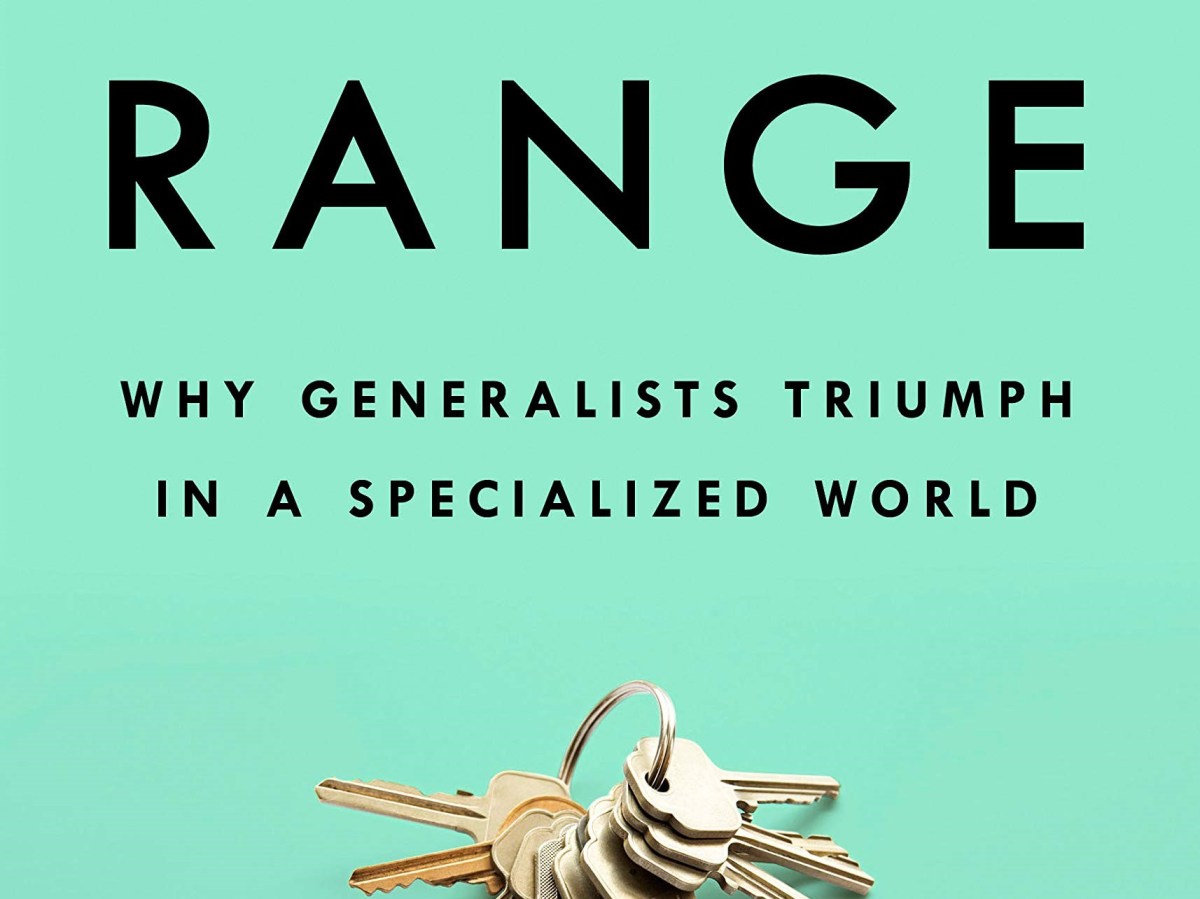
Range

David Epstein’s Range argues that in the modern world it’s generalists who will succeed over specialists in a wide variety of situations.

There are a few narrow fields where early specialism may triumph. Easy learning environments where you get quick feedback on what went right or wrong. Things that have repeatable elements that you can reliably master. Chess, golf and playing certain instruments can all match these criteria, and we can all think of examples of people who specialised early and went on to be masters in the field.

However, wicked problems are not so tractable to the early specialisation. Things that take longer to see success or failure. Areas where novel thinking is required, or connecting multiple dots from different disciplines leads to success. In these areas, early specialisation can be harmful, the focus on mastery of a narrow area leads to solution blindness. Every problem is solved with a hammer, no matter if it’s a nail or not.

The book argues for early sampling before applying focus to attempt to achieve mastery. Most of the most successful people at even the repeatable problems try out a range of things before settling on the one that they connect most with, and that sampling time gives them confidence that they connect well with what they’ve settled on, and the grit to succeed.

It’s not the case that we don’t need specialists, they move forwards the state of the art, they go deep into problems and create something new. Generalists can span across these deep solutions, connect them in novel ways and bring to bear existing solutions from one domain, to solve a problem in a way a specialist would never be aware of.

Epstein also gives practical advice to make use of these generalist successes. Take the time to sample in an area. Support children who are doing so and don’t worry if they ‘fall behind’ early on, once they find fit they’ll accelerate ahead of the early strivers. Don’t get held up on grit to be successful, you need to want to be there before getting gritty matters.

Make use of existing tools. Learn from specialists and take the best of what they know to solve problems in your areas.

Create diverse groups to solve problems more effectively!

Range is a great book to look at what learning techniques and approaches work well in the wicked modern world, how we’ve fallen for some bad assumptions on specialisation and how we can balance the two to be more than the sum of our parts.

Categories
Coaching Leadership

Surely they must understand

In big orgs, it’s really easy to fall prey to the assumption that people have the same context as you, the same incentives and the same decision making approach.

It becomes most obvious that you are falling in to this mistake when you work with a group that you aren’t used to working with, and you have a big break in communication. Something that your team considers vital is not even a consideration to them. You get frustrated, it’s obvious. Surely they must understand what you want is the most important thing, and how you want to do it is the right way.

If the other group think in the same way, then there’s never going to be a solution. You’ll bang up against each other, each thinking you are right, that you are doing the thing that best for the org, and that the other side is just wrong.

The best way I’ve found to manage this is to bring in your coaching skills of questioning and listening. People are neither evil nor stupid, and the vast majority believe that they are doing the best thing based on their current context.

So if you hit this disconnect, start asking questions to understand more:

  • What’s your top priority right now?
  • When can you support our needs?
  • How would you solve our problem?
  • What other approach could we take?
  • How can we help to find a solution?
  • Who can break this deadlock?

By understanding more of the context, and sharing more of your own, you build the pool of understanding across the group. You can determine what the right way forwards is, and rather than two sides fighting against one another, you come back to the single team seeking the best outcome for the larger group.

Don’t get frustrated if people don’t immediately do what you want, be ready to do the work to share the why, and to help them understand rather than falling to the fallacy that everyone always thinks the same as you.

Categories
Coaching Leadership

Personality Tests

In the corporate world, you are certainly going to encounter a range of personality tests. I’ve previously talked about not ending up in a box, but rather to take what you can from the test.

One way to do this is to take a range of tests, as this can both help you pull out some themes, and not get too stuck into that single focus from a one-off result.

So whether that’s Clifton Strengths, Management Drives or something else, have a go and see what comes.

There’s not necessarily a lot of real science behind these tests, but if you take them honestly, you’ll probably find something that resonates with you. A major benefit is the language that they use to talk about certain personality traits. Particularly if the test is favoured by your org, it can build in some useful shorthands.

The best tests are the ones that open you up rather than close you down. Thinking about how to be more successful by leaning on your strengths or being aware of blind spots is always powerful. It’s the process and time that you take to reflect that gives you that chance to grow.

You aren’t a giraffe, you aren’t green. You aren’t a Judger and you aren’t an Alchemist. You are a person who can learn and grow and change, and you can do that the best when you focus on the practice and reflect on your journey.

Categories
Coaching Leadership

Who’s Already Doing The Work?

There’s a particular type of tech minded person who is so focused on ‘disrupting’, ‘innovating’ or ‘problem solving’ that they seem allergic to doing the due diligence on what’s gone before.

Even with the best of intentions, this can be draining, wasteful and sometimes downright dangerous.

They come up with a big new idea, it’s something that’s not being done obviously in the part of the organisation they are working in, and they dive right in, cutting through bureaucracy and getting stuff done. With any small early success, they may well then go on to be a ‘thought leader’ on the problem, urging everyone to take up this magical new thing that they have been driving forwards.

If it’s truly new ground, then this can be a great thing, moving forwards the state of the art.

The problem manifests when this person hasn’t done their due diligence. They haven’t stopped to review what’s already going on in the space. They don’t know who else is working on the same issues and they have no idea why things are the way they are right now.

They annoy people already working on the problem. They work on things that have already been solved, covering old ground multiple times. They ignore vital checks and balances that ensure fairness as they don’t stop to wonder why those check were put in place in the first place.

So, don’t be that person. Be the person who understands why a fence is there before trying to take it down.

When you spot a possible problem, ask some quesstions:

  1. Does anyone else think this is an issue?
  2. What was tried in the past to fix this?
  3. What’s being done about it right now?
  4. What’s been done in similar organisations to solve this problem?
  5. What research or other information informs solutions to this problem?
  6. Who can I support to bring about a change?

Once you have collected this information, then you should be well enough armed to drive forwards a positive change, rather than just re-treading the ground someone else is already covering.

Smart people Observe, Orient, Decide and then Act.

Categories
Coaching Leadership

Timeboxing Exploration

It’s easy to fall into the trap of Analysis Paralysis. One more bit of data, a couple more answers to a survey, the feelings of that final stakeholder.

Whenever we are in an uncertain time, you can think that it’s best to get to certainty before trying to act.

It’s a false premise, fight that urge.

Most of the information that you need to make a decision will be easy to gather, and the last few pieces will be a lot more expensive and probably less valuable.

So instead, set aside a timebox to do this exploration and to gather information. I find it works best if you are clear about what you are trying to learn, what the decision is you are trying to make, and also honest about what you know now.

By making decisions based on a fixed amount of data collection, you can move on to actually seeing how the analysis you’ve done holds up in the real world, and start on any course corrections early.

Pick shorter timeboxes for smaller decisions. If it’s low impact or low risk, don’t waste much time on it at all. If you are investing a couple of weeks work for the team, then spending a few hours to validate assumptions is great. Spend a couple of days on your plans for the quarter, and a week or two to set a annual strategy.

You need to be disciplined, and actually stop and make the decision once you hit the limit of the timebox. So start with the smaller activities to build confidence and go from there.

Once you’ve done the analysis, made the decision and implemented the outcome, then review the outcomes to see how you did.

The way to make good decisions is to make lots of them, to learn what went well and to do more of that. You get there by focusing your exploration time, learning the most important things, making that decision and doing it all over again!

Categories
Coaching Leadership

Fail in Novel Ways

To be successful, you have to take risks. If you take risks, then sometimes you are going to fail. When you fail, you need to learn from what went wrong.

As a leader, it’s important for you to put in the effort to learn some things before they are actually seen in your context. The risks you take should be smart, and they are smart if you’ve thought about, and mitigated, the familiar ways to fail.

You should always strive to make your failures novel.

If it’s easily predictable, something that’s failed similarly before or a direct repeat of a failing in the past, then you haven’t learnt what you needed. You are letting down those that rely on you.

This Saturday, Swatch launched their Moonswatch, a collaboration with Omega. Only to be sold in stores, available on launch date in limited numbers. Wildly anticipated, certain to be incredibly popular.

These types of product drops are becoming more familiar in retail environments, and there’s a standard playbook to manage them.

Unfortunately, this playbook didn’t make it out to every store. Some managed well and gave people a great experience. Some really didn’t, leading to scrums in the street, the police being called and stores closing a few minutes after opening.

There’s a school of thought that all publicity is good, but here the company could have avoided the bad with better planning and just basked in the good of a well managed launch, a popular item selling out fast and lines of people waiting for their chance.

What basic mistake are you going to avoid? What can you learn today to make sure your next failure is a novel one.