Categories
Book Review Coaching Leadership

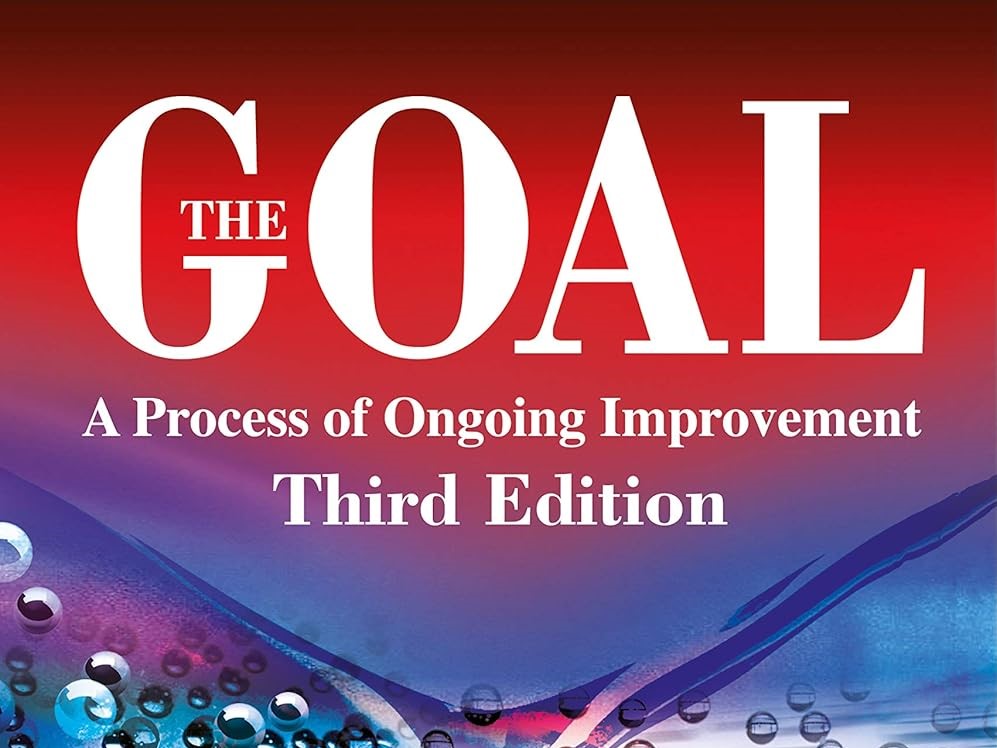
The Goal

There’s loads of value in going back and revisiting the classics, not just to remind ourselves why they are a classic, but also to see which of those lessons we are missing out on and could be making more use of in our day-to-day lives.

The Goal is one of those classics that anyone in a large organisation should take the time to read. It’s a story based around a struggling factory, a company under stress and a leader who can’t find the way forwards. It’s also a lot more than that. It’s a primer in system thinking, the theory of constraints and some of the basics of queuing theory.

Before you go too far, it is also worth highlighting that it’s a bit of a product of its time, some of the scenario is very “mid century American corporate”, whilst the trappings may feel dated, the core principles are solid.

It strips everything back to the core question. What is the end goal of a company? To make money by providing maximum value. What other measures matter? None.

You go through a journey of learning, identifying where the bottlenecks are, removing them in turn and finding more capacity than you ever thought you had, with no fresh investment.

Forcing things through, chasing with “urgency” might just fight your immediate fire, but it won’t transform your delivery, or get you out of a hole. Only taking the time to step back, to look at everything going on, find the thing that is constrained and fixing it. Only having that discipline will make a difference.

We learn that making assumptions is misleading. We need to get out on the shop floor to really see what’s going on. We all learn that small fluctuations lead to large delays in the end, especially as the number of steps increases.

Wherever you can remove a dependency, you speed everything up. Each time you remove wasted effort from your bottleneck, you speed everything up. Where you find a way to put more resources to serve your constraint, you speed everything up.

When you look at the system overall, you see the cost/benefit equation differently. The costs of an hour in the bottleneck is a cost of an hour of overall production.

Improving things that aren’t the bottleneck is just waste. Piling up more half finished things in a queue for a constrained machine is a cost, not creating more value.

Improving the bottleneck is worth doing even inefficiently. You don’t consider the cost of the step, you must measure against the cost of value forgone overall.

This way of thinking isn’t easy to come by, it’s a lot easier to manage a dependency, to optimise on the micro and to celebrate getting your bit done. Switching to this model of systems thinking requires discipline, and it requires lots of belief. These findings are counter-intuitive, and contrary to the easy answer or standard thinking.

You need to convert the production line concepts to your own context, which you can do in any creative endeavour.

Give people this book, get them to read it and then you can start your experiments in optimising the system and delivering the most possible value!


Categories
Coaching Leadership

Small Wins

I’m big on building momentum to drive positive change, and I’ll probably keep writing about how small steps get you there forever.

A big part of this is taking time to celebrate the small wins. They really have an outsize impact as you work to make big changes.

As you know if you’ve been around here for a while, I’ve been doing some work on my house, and so I’ve been getting to celebrate a lot of small wins. One of the less exciting jobs is to clean the radiators (seriously, go and have a look down them if you haven’t done this before!).

I didn’t want to pour water down them, so it’s time for dusters and a vacuum cleaner and what felt like was going to be a bit of a slog. Before going too deep I had a good look at the radiators and found that they had a cover that looked like it might come off. With a couple of quick YouTube searches, I found the matching type and had the knack of taking the cover off.

It was immediately massively better than trying to clean them with the cover on. By taking a few minutes out to make things better I both managed to do a far better job, and do it in less time overall.

It’s just a small job, but by not rushing and doing the prep right, it left me feeling a lot happier.

So where can you find your small win for a better overall outcome?

Categories
Coaching Leadership

Getting Better

The trick to getting better at something is to take those small steps forwards. Over time, they can build up to big improvements. It’s a theme that I’ll often return to, as it really is a powerful way to significant progress.

The real trick is getting comfortable with the small steps, and the fact that each one might not feel a lot like progress in isolation. It might even feel like things are getting worse, a super common feeling when you are doing as much DIY as I am at the moment.

So, once you’ve set your big goal, you know the general direction. Then you need to figure out a small step. Think about the time you have, the tools you have, your motivation and current skills. Pull it all together and claim that first step. Visualise what it’ll look like, then do it. Then keep going.

I’ve been repainting the under stairs cupboard, which is something that definitely needed to be broken down into steps, timed around all sorts of commitments, and with a certain amount of skills missing!

Buy the tools, clean up the space. Strip the old paint, and again in the stubborn bits. Clean up again. Final prep and taping round the edges. Actual putting on a coat of paint! Then another. Cleaning up for the final time.

The door still needs to be repaired, but that’s a job for the future.

Each of the steps is approachable, you know what you need to do for each one. Some of them are discovered as you go. They weren’t in an initial ‘plan’, but they we the logical next step from the current position. Some took hours and some a few minutes. There was a stopping point that didn’t involve rehanging a door.

As a big goal it’s a bit overwhelming, it’s not a one day job with all the stages. Each step was much more tractable, it was fitted in when there was time and it was always making progress.

By having regular stopping points I could take satisfaction that each step was progress. Even if some of those early ones didn’t feel like it a the time, I could put them in context of a big goal.

So break down the big goal, pick a small step, do it, stop and reassess, then go again!

Categories
Leadership

Alignment

There are lots of ways to set goals, and lots of ways to get going on achieving them. It’s pretty much the same approach when you are setting your own personal goals as to when you are setting those for your organisation. The difference is in the circle of people you consult with (more professional overlap for the org goals!), and then how widely you share them.

Sharing your personal goals helps you commit to actually making them happen. It’s not vital, but it’s certainly useful. Sharing your org goals is vital! It’s the only way they are going to happen, and it’s the only way that people will know what you are trying to achieve as a group.

Banging them in a slide deck and calling it a day is not going to cut it. That doesn’t give the alignment that you need to have everyone pulling in the same direction to chase down these big goals.

Instead, you need to get your comms plan in gear, figure out the arenas you can sell your goals in. Present them to people, tell them why these particular goals matter and why they are more important than other things we could be doing. Take questions and answer them honestly. Record some sessions for people who are on leave. Share them in Slack, put them on the Intranet (woo!) and finally point people to the deck!

Then repeat this, and go again. Talk about progress towards the goals, share the successful steps towards them and keep them in people’s minds.

This multi-channel approach might get decent visibility and some good buy-in, and the repetition will help, but you won’t actually know how aligned people are to these goals.

Ask them!

As a leader you’ve got more context, you know what’s going on and you have more background than most people in the org. It’s all obvious to you, but it might not be to the Individual Contributors doing the work.

So, ask some questions:

  • What is our top goal for the year?
  • Why are we going after this?
  • What are we not going to do?

Look for patterns in what comes back. What’s missing, what’s wrong, what has actually landed with people? Take these themes, then use them to rework your comms. Address the misconceptions, dive deep into the gaps and celebrate the good understanding.

You build alignment with clear messaging, repetition and rework.

It’s not a one-and-done deck and presentation, and if you think it is you are destined to fail.

Categories
Coaching

Bust the Jargon

When you are firming up goals and dropping the vague, you also massively benefit from busting the jargon.

The world is overwhelmed by synergy, thought-leadership and efficiencies. There’s still far too many rock-stars and even the occasional ninja in software development.

Most people who’ve been in business for a while will be accustomed to speaking the jargon. It’s easy to throw in a few more words and lose the meaning.

Try stripping it back and saying what you really mean. Take a statement that’s jargon heavy, and restate it into terms that people outside of your direct context could connect to and uderstand.

I’ve done it myself recently, and it can really take a few repetitions to get to something that’s really meaningful. Watch out for loops. It’s easy to replace a bit of jargon with something equally meaningless to someone outside of the bubble.

Imagine explaining your goal to a friend or family member. Would they understand what you want to do, or what achievement you are chasing?

Creating this clarity also lets you see how well the goal aligns to your values. Jargon can hide this, so strip it away and make sure you are doing what really matters to you.

Categories
Coaching

Got Goals?

I’ve written a number of times about setting powerful goals. Going through a process of understanding where you want to get to, how you’ll recognise you’ve made it there and creating statements of accountability helps to shape your focus and purpose.

Once you’ve done this? What next?

Understand your options. Come up with some approaches that might help you achieve your goals. Think about what will be hard, visualise the steps you can take to remove barriers. Lay out a range of choices.

Then pick one, and do something that will move you closer to achieving your goals. Take that first step and start to build momentum. Keep on taking steps. There are no quick fixes, so you’ll have to keep going and going. Once you’ve started it will get easier, if you keep on putting in the work.

A sufficiently transformative goal will not be achieved in a single burst of effort, so build in a plan to review your progress. Some steps are easy, so might need reflection on a weekly basis. Some take longer to show progress, so you may look back monthly. Whatever you do, setup a regular cadence. Learn from what you’ve done and correct early, and you will progress more quickly.

Goals are great once you have them. Now you need to go and achieve them!

Categories
Coaching

Down With Vague

If you set a vague goal, you’ll get a vague outcome.

It’s easy to restate yourself as succeeding if you don’t define what success looks like.

When your goals are well formed, you bring accountability to your desire to grow. You’ll know what will help you achieve your desired outcome, and you’ll have a great view on the things that will be less likely to contribute to that success.

Examples often help, so let’s consider the vague goal of “Get better at public speaking”.

We’ll strengthen this up, and make it a real tool to empower your growth. You can follow the same process whenever you discover a vague goal.

First off, you need to understand why you are setting this goal. What change do you want to bring about? Is this about speaking to small groups or giving keynote speeches? Do you want to improve in ad-hoc situations, or in more structured settings. Is the aim to share information better or to inspire your listeners. Is this about presenting to people who report to you, or to those you report to?

Running this process lets you shape that vague goal towards meaningful change.

Imagine we’ve refined to “Improve how I present to senior stakeholders to build confidence in my ideas and secure funding for significant programmes of work”. This is already significantly more powerful. It narrows the scope to something meaningful that you’ll be able to make progress on. For your own goals, you can refine further or be even more specific to really give it a defined shape.

Next up, add “by” to your goal, and how you’ll go about taking the smaller steps towards success.

This is your accountability power move. It’ll let you check-in and measure progress as you move towards a great outcome.

For our example, we say “by creating short evidence based presentations that focus on the problem, the value of the solution and how this programme will address it. By practising at least three times ahead of the stakeholder presentation with members of my group to tighten the proposition and build confidence in the structure. By recording my practice and reviewing it at least twice to find weaknesses and eliminate them”.

Again, you’ll know your own context and situation, so you’ll be able to be even more powerfully specific in your approach.

We’ve taken the vague and made it real.

“Get better at public speaking”

Vague and uninspiring

“Improve how I present to senior stakeholders to build confidence in my ideas and secure funding for significant programmes of work by creating short evidence based presentations that focus on the problem, the value of the solution and how this programme will address it. By practising at least three times ahead of the stakeholder presentation with members of my group to tighten the proposition and build confidence in the structure. By recording my practice and reviewing it at least twice to find weaknesses and eliminate them.”

Powerful statement driving lasting change

Make your commitments count, Down with Vague!

Categories
Coaching

PURE Goals

Now that you are making sure your goals are stated in a SMART way, you should also check that they are PURE.

  • Positively Stated – Make an inspiring and forward looking statement of achievement. Switch or invert negative terminology and find a restatement based on growth or improvement. Drop out “not”, “won’t” and other limiting phrasings.
  • Understood – There’s a easily explained “why”, you know what the goal means and you have a plan to achieve it.
  • Relevant – It’s aligned to your current situation, or the situation you are moving towards. It will help you reach your End Goal and achieve your dreams.
  • Ethical – It aligns with your values. It’s not just positively stated but it’s also going to have a positive impact on the world. If you achieve this goal, then something will have gotten better for a range of people.

Sometimes, it’s hard to write SMART goals, but we get better at creating them and holding ourselves accountable by doing, reviewing and refining. It’s the same with PURE. Your first statement might not match the criteria and that’s totally fine. Look at what you’ve written, restate it and keep going.

If you want to grow and change in a positive way, then have ethical goals, relevant to your wider desires, that are well understood and that are positively stated will give you the best opportunity to have the impact you want to have on the world.

Categories
Coaching

Personal Mental Training

Coaching is personal training for the mind.

If you are exercising alone then you might be doing a great job or you might be working at 50% effectiveness. Some days you’ll just think about doing something, and you might even feel good about the thinking, without getting to the doing.

Getting some one on one time with a trainer will quickly set you up for success. You’ll find improvements in technique, you’ll be motivated to show up and you’ll be accountable for your actions while you are with them.

Once you’ve finished a set of sessions, you’ll be able to be more confident in your abilities, you’ll have learnt enough to improve at your own pace and you’ll have massively accelerated your journey.

Coaching is the mental equivalent of the personal trainer. A Coach will help you formulate your thinking. They’ll hold you accountable and make you work at 100%, to always be your best. You will find the right framework to describe your goals, to make your commitments and to succeed now and in the future.

If you are ready to take that next step, then reach out, and start achieving your goals now.

Categories
Coaching

Reset the 5 Year Plan

A lot of people have a plan in their minds for the next few years. For some, it’s pretty nebulous, with a lot of potential outcomes. For others, it’s a strongly worded set of Goals and Outcomes, it’s their 5 Year Plan.

Now is an excellent time to stop and reflect on that plan, especially if it was at the firmer end of the spectrum. Lots of things have happened in the world over the last six months, very few of them have been business as usual.

The shock of change may have been major, or it may have impacted you little. Either way, these large societal shifts give you the chance to reassess, and to decide if now is the right time to change things up and take a different path.

Firstly, you can reflect on your goals. Do they still resonate with you? Are they still relevant in the world as it is now? Will achieving them bring you the meaning that they had when you set them?

Next, look at your reality. Are you still on the path to achieve these goals? Have you lost impetus or opportunity? What is different in your situation now as opposed to six month ago? How about compared with when you set out these goals?

This process might tell you to carry on, to double down or to totally switch track. Any of these options are great, so long as it’s the right choice for you. For a big, long-term, commitment it’s worth spending the time to make sure this option is the right choice. Sleep on it, see how you feel in the morning. Talk it through with trusted people in your life.

When you make a conscious choice to review your goals, then you’ll be re-energised and set-up on the path to success. Certainly a worthy endeavour for an afternoon or two!