Categories
Coaching

Down With Vague

If you set a vague goal, you’ll get a vague outcome.

It’s easy to restate yourself as succeeding if you don’t define what success looks like.

When your goals are well formed, you bring accountability to your desire to grow. You’ll know what will help you achieve your desired outcome, and you’ll have a great view on the things that will be less likely to contribute to that success.

Examples often help, so let’s consider the vague goal of “Get better at public speaking”.

We’ll strengthen this up, and make it a real tool to empower your growth. You can follow the same process whenever you discover a vague goal.

First off, you need to understand why you are setting this goal. What change do you want to bring about? Is this about speaking to small groups or giving keynote speeches? Do you want to improve in ad-hoc situations, or in more structured settings. Is the aim to share information better or to inspire your listeners. Is this about presenting to people who report to you, or to those you report to?

Running this process lets you shape that vague goal towards meaningful change.

Imagine we’ve refined to “Improve how I present to senior stakeholders to build confidence in my ideas and secure funding for significant programmes of work”. This is already significantly more powerful. It narrows the scope to something meaningful that you’ll be able to make progress on. For your own goals, you can refine further or be even more specific to really give it a defined shape.

Next up, add “by” to your goal, and how you’ll go about taking the smaller steps towards success.

This is your accountability power move. It’ll let you check-in and measure progress as you move towards a great outcome.

For our example, we say “by creating short evidence based presentations that focus on the problem, the value of the solution and how this programme will address it. By practising at least three times ahead of the stakeholder presentation with members of my group to tighten the proposition and build confidence in the structure. By recording my practice and reviewing it at least twice to find weaknesses and eliminate them”.

Again, you’ll know your own context and situation, so you’ll be able to be even more powerfully specific in your approach.

We’ve taken the vague and made it real.

“Get better at public speaking”

Vague and uninspiring

“Improve how I present to senior stakeholders to build confidence in my ideas and secure funding for significant programmes of work by creating short evidence based presentations that focus on the problem, the value of the solution and how this programme will address it. By practising at least three times ahead of the stakeholder presentation with members of my group to tighten the proposition and build confidence in the structure. By recording my practice and reviewing it at least twice to find weaknesses and eliminate them.”

Powerful statement driving lasting change

Make your commitments count, Down with Vague!

Categories
Coaching

Dancing Through Life

Those who don’t try, never look foolish.

This piece of wisdom is certainly true, but will never enable you to achieve your potential.

If you coast through life you’ll live forever in your comfort zone. You won’t take the steps that you need to move into a space of learning and you won’t grow and develop.

When it’s easy, it might feel great. You are able to succeed at things you set your mind to without any effort because they are within your capabilities.

To grow, you must stretch yourself. You need to find moves that are beyond your current capabilities. Dance through them. Celebrate the successes and review your missteps.

If it’s perfect the first time, it wasn’t really a stretch. Don’t let easy get in the way of great, and make the mistakes you need to reach your full potential.

Categories
Coaching

PURE Goals

Now that you are making sure your goals are stated in a SMART way, you should also check that they are PURE.

  • Positively Stated – Make an inspiring and forward looking statement of achievement. Switch or invert negative terminology and find a restatement based on growth or improvement. Drop out “not”, “won’t” and other limiting phrasings.
  • Understood – There’s a easily explained “why”, you know what the goal means and you have a plan to achieve it.
  • Relevant – It’s aligned to your current situation, or the situation you are moving towards. It will help you reach your End Goal and achieve your dreams.
  • Ethical – It aligns with your values. It’s not just positively stated but it’s also going to have a positive impact on the world. If you achieve this goal, then something will have gotten better for a range of people.

Sometimes, it’s hard to write SMART goals, but we get better at creating them and holding ourselves accountable by doing, reviewing and refining. It’s the same with PURE. Your first statement might not match the criteria and that’s totally fine. Look at what you’ve written, restate it and keep going.

If you want to grow and change in a positive way, then have ethical goals, relevant to your wider desires, that are well understood and that are positively stated will give you the best opportunity to have the impact you want to have on the world.

Categories
Coaching

Personal Mental Training

Coaching is personal training for the mind.

If you are exercising alone then you might be doing a great job or you might be working at 50% effectiveness. Some days you’ll just think about doing something, and you might even feel good about the thinking, without getting to the doing.

Getting some one on one time with a trainer will quickly set you up for success. You’ll find improvements in technique, you’ll be motivated to show up and you’ll be accountable for your actions while you are with them.

Once you’ve finished a set of sessions, you’ll be able to be more confident in your abilities, you’ll have learnt enough to improve at your own pace and you’ll have massively accelerated your journey.

Coaching is the mental equivalent of the personal trainer. A Coach will help you formulate your thinking. They’ll hold you accountable and make you work at 100%, to always be your best. You will find the right framework to describe your goals, to make your commitments and to succeed now and in the future.

If you are ready to take that next step, then reach out, and start achieving your goals now.

Categories
Coaching Leadership

Appeal to Rationality

In a difficult conversation, it’s easy to fall into the trap of appealing to rationality. When emotions are running high, especially on one side of the conversation., then you may try for a “let’s just be rational about this”.

It’s a very similar position to asking someone to “calm down”, and likely to have about the same effect. That’s ranging from nothing, to a full and final breakdown in communication.

We fall into this trap when we are less immediately impacted by the conversation. Maybe it’s one where you’ve had time to digest the contents, whereas the other party is hearing tough news for the first time.

Quite often it’ll be when the topic is incredibly important to the other party, but is less impactful to you. It’s extremely common when you confuse a lighthearted topic with one that’s truly important to the other person. That’s a difficult conversation which you didn’t realise would be difficult, which is just about the hardest kind.

Appealing to rationality, or attempting to be logical, will not work in an emotional situation (and all situations are somewhat emotional). There’s no independent arbiter doling out correct answers. No impartial judges validating your feelings over another’s. When you move to “rationality”, this external justification is exactly what you are seeking, to the detriment of the overall conversation.

When you are reaching for this conversational gambit, you may really be attempting to slow down the conversation, bringing it back to a shared pool of understanding.

If that’s the case, just go for it. Recognise the emotion, and ask to take a moment. “Can I take a second to gather my thoughts?”, “I can see that this is a really important topic for you, what else would you like to share right now?”. “I’m keen to understand more, I’m sorry I’m not there yet”.

All these are approaches to bring you towards a productive exchange of meaning, which you won’t get with a suddenly appeal to faceless authority.

Don’t waste time being rational, when you can build a lasting an powerful human connection instead.

Categories
Coaching Leadership

Space to Fail

When you are learning a new skill, or mastering a new endeavour, you must give yourself space to fail.

If a change is going to be meaningful, there will be risk of failure. However, you can reduce your overall chance of failure by giving yourself the opportunity to make small mistakes, and learn from them.

If you don’t embrace this, then you’ll turn the situation into a binary all-or-nothing. Success / Fail. Yes / No. Put in such stark terms, you may well just choose to do nothing, which is a painful way to miss out on reaching your true potential.

Rather than letting this risk become a big thing, make it small. Embrace an amount of failure as you learn. If it’s perfect first time, then you didn’t find enough to challenge yourself.

In the Build – Measure – Learn model of the Lean Startup, you find an approach that celebrates giving this space. It pushes you to iterate quickly thorough ideas, learn what works and what doesn’t, and to then refine the outcome.

You can apply this model to your own goals and the options you consider when attempting to reach them. Don’t phrase something as all or nothing. Think about the iterative steps you’ll use. How you’ll learn from things that didn’t go so well so you’ll improve the next time.

Once you’ve started, you can correct your course. Doing it little and often means that no one experience is catastrophic. You start of failing and learning, then you start to succeed and finally you are achieving at a high level.

Give yourself space to fail, and you’ll get to success far sooner.

Categories
Coaching

Reset the 5 Year Plan

A lot of people have a plan in their minds for the next few years. For some, it’s pretty nebulous, with a lot of potential outcomes. For others, it’s a strongly worded set of Goals and Outcomes, it’s their 5 Year Plan.

Now is an excellent time to stop and reflect on that plan, especially if it was at the firmer end of the spectrum. Lots of things have happened in the world over the last six months, very few of them have been business as usual.

The shock of change may have been major, or it may have impacted you little. Either way, these large societal shifts give you the chance to reassess, and to decide if now is the right time to change things up and take a different path.

Firstly, you can reflect on your goals. Do they still resonate with you? Are they still relevant in the world as it is now? Will achieving them bring you the meaning that they had when you set them?

Next, look at your reality. Are you still on the path to achieve these goals? Have you lost impetus or opportunity? What is different in your situation now as opposed to six month ago? How about compared with when you set out these goals?

This process might tell you to carry on, to double down or to totally switch track. Any of these options are great, so long as it’s the right choice for you. For a big, long-term, commitment it’s worth spending the time to make sure this option is the right choice. Sleep on it, see how you feel in the morning. Talk it through with trusted people in your life.

When you make a conscious choice to review your goals, then you’ll be re-energised and set-up on the path to success. Certainly a worthy endeavour for an afternoon or two!

Categories
Book Review Leadership

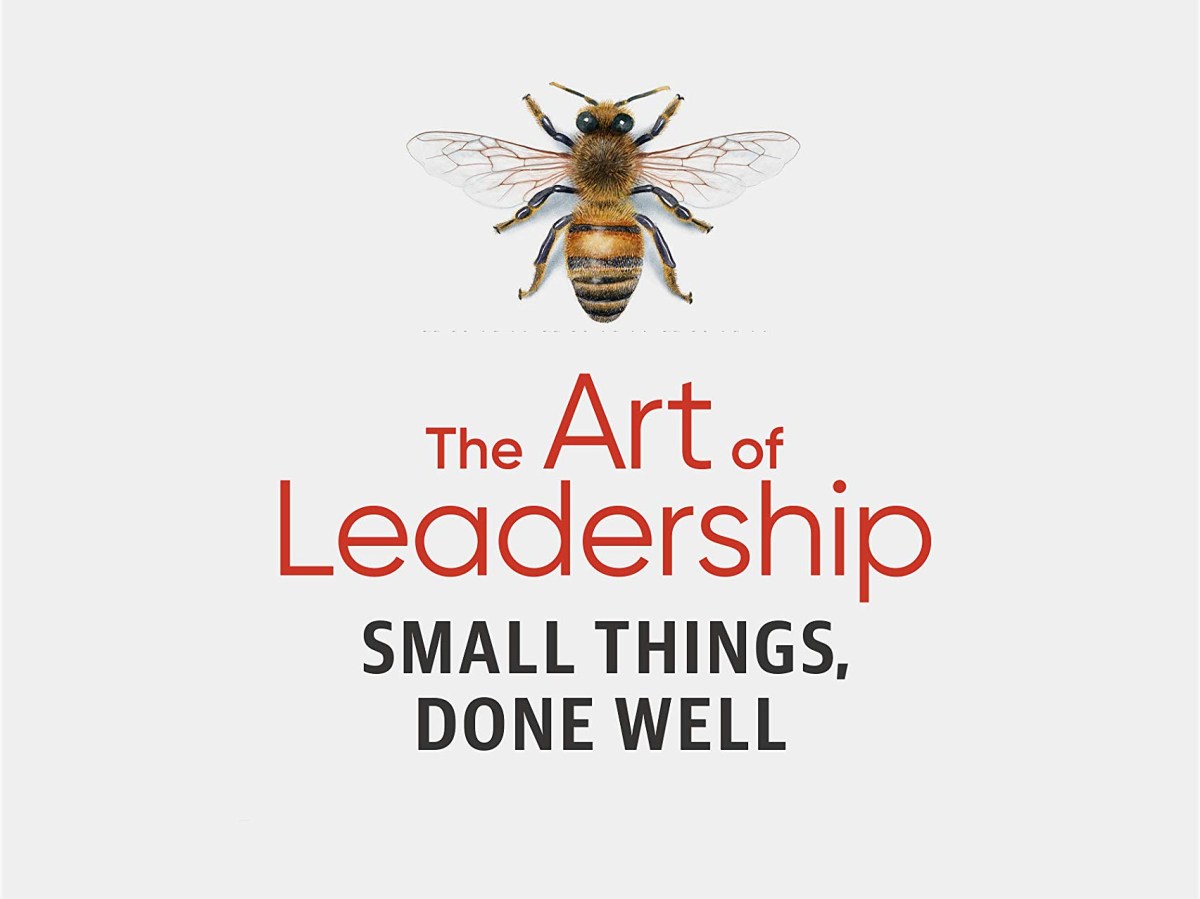
The Art of Leadership

Michael Lopp’s new book has just been released. The Art of Leadership, Small Things Done Well. I’ve had it on pre-order since December, so I was very excited to get it into my hands.

It’s a collection of thirty small things you can do as a leader to build trust and respect in a team. The book is structured around three stages of leadership in organisations, a Manager, Director and Executive.

Lopp takes you through the journey from Individual Contributor, to a Manager leading a team, a Director who is leading Managers, and an Executive who’s accountable for the direction of the company. Each of the small things is especially relevant to a leader at that specific level, but is still something to keep in your toolkit as you move on to greater spans of control.

It covers pitfalls (New Manager Death Spiral) and sometimes unexpected areas of focus (when recruiting, spend an hour per day per open role). Communication is a key theme, whether that’s how to hold effective 1-2-1s, to say the hard thing or how to communicate difficult change through a large org. It recognises that you’ll be bad at each of these roles for at least a few years until you master them, so embrace failures, learn from them and growth through the experience.

If you already follow Rands, then you’ll be familiar with a lot of this content from his excellent blog. The book takes this to a next level, grouping, ordering and curating a common set of advice that is important for all leaders.

It’s a powerful book, it’s easy to read and it’s something you’ll be excited to revisit and dip back in to for years to come.

Categories
Coaching

Losing it hurts more

The pain of losing something we have is about twice as great as the pleasure that comes from gaining something new.

This idea was first formalised by Daniel Kahneman and Amos Tversky as Loss Aversion. It’s the idea that we prefer to avoid the loss of something, over achieving an equivalent gain.

This limitation in thinking can quite easily cause us to baseline our position badly. It may stop us making a valuable change as we hold on too tightly to something we already have, or it might stop you going after a valuable opportunity because you fear losing something you already have.

You can run through a number of experiments to see how much you are affected by Loss Aversion. For a simple test, think about an item you own. Pick something that doesn’t have a large sentimental value, and that can easily be replaced. Maybe think about a TV or other electrical utility item. Imagine losing it or breaking it. How do you feel?

Now imagine that you win a new version, modern, up-to-date and better than your current model. How would that make you feel?

If you feel worse with the Loss, then that’s an example of a type of Loss Aversion. It’s very common. I’m happy with my current TV, and I’d certainly feel worse losing it.

To escape from the effect, you can frame goals and outcomes differently. Looking at the cost of things as an example. Would you prefer a £10 discount or would you prefer to avoid a £10 surcharge? Most of us prefer to avoid the surcharge, as we see that as a loss.

When you’re being coached, you’ll find it’s a lot more powerful to phrase your goals in positive terms. If a goal might cost you something to achieve it, try and baseline the goal so you don’t phrase it as including a loss.

As an example, think about investing time and effort in yourself, rather than spending money for an uncertain gain, or giving up your weekends. Don’t be forced to exercise (losing free will), but be thankful for the opportunity to improve your fitness.

Framing in this way will move you away from Loss Aversion, and give you the tools for success in your chosen endeavour.

Categories
Coaching Leadership

Interference

What is interfering with you reaching the pinnacle of your performance? Where is the noise coming from? What’s the one thing you can do right now to cut some of it out?

Interference is the heat and light that blinds you, stopping you achieving your full potential. This fundamental idea was shared by Timothy Gallwey, writer of the Inner Game, a classic text of modern coaching practice.

It’s a simple concept, your Performance is equal to your Potential minus the Interference.

You can take steps to increase your potential over time, by learning, choosing to reflect and grow rather than just do.

You can also perform better by cutting down on the interference. It might be your own self-doubt, or the nay-saying of those around you. Maybe it’s distractions in the environment, where too many options pull you in different directions. Possibly you don’t know what the end goal is, it’s too fuzzy and uncertain to progress.

Stop now and take five minutes. Where’s the interference right now? What can you do to reduce it, dialling down the background noise?

If you know where the interference is coming from, you can block it out and achieve your full potential, turning in to true high performance.