Categories
Coaching Leadership

Go with the Gut

It’s easy to fall into the trap of Analysis Paralysis, endlessly reviewing decisions and never actually doing something.

If you find yourself doing that, then you can break out of the loop by trying to go with your gut.

Don’t spend forever building the decision up, but think about what feels good, and go with that.

It’s best to use this approach for smaller decisions, especially in areas that you are familiar with or that give you an option to undo if really necessary. It’s a topic I’ve written about before, but it’s really useful to remember that there are very few decisions that are truly irreversible.

If it feels a bit overwhelming, break up choices into smaller decisions. One thing that often drives the paralysis is the scope or the implication that you feel of the decision. Don’t get hung up on the colour scheme of your entire house, just paint a room in a colour you like the feeling of. If it looks good, great! If not, it’s a smaller investment to correct than having done the whole building.

When we look to our gut, it’s good to run a few checks before really trusting it. Is this an area that you are confident in? Is it really a familiar space for you to make a decision? Is there a way to make it smaller or easier?

Finally, check your bias. Especially in cases where it’s a decision related to people not things. If you like a particular way of doing things, or are comfortable with an approach, make sure you aren’t layering that bias onto the decision. Challenge this with a quick checklist or a way to score performance. Sometimes you break the paralysis by having the tools in hand to make the decision before you are called to think about it.

So, if you find yourself getting stuck, find some opportunities to make quick decisions and measure the outcome, and use this to hone your approach to make a choice faster.

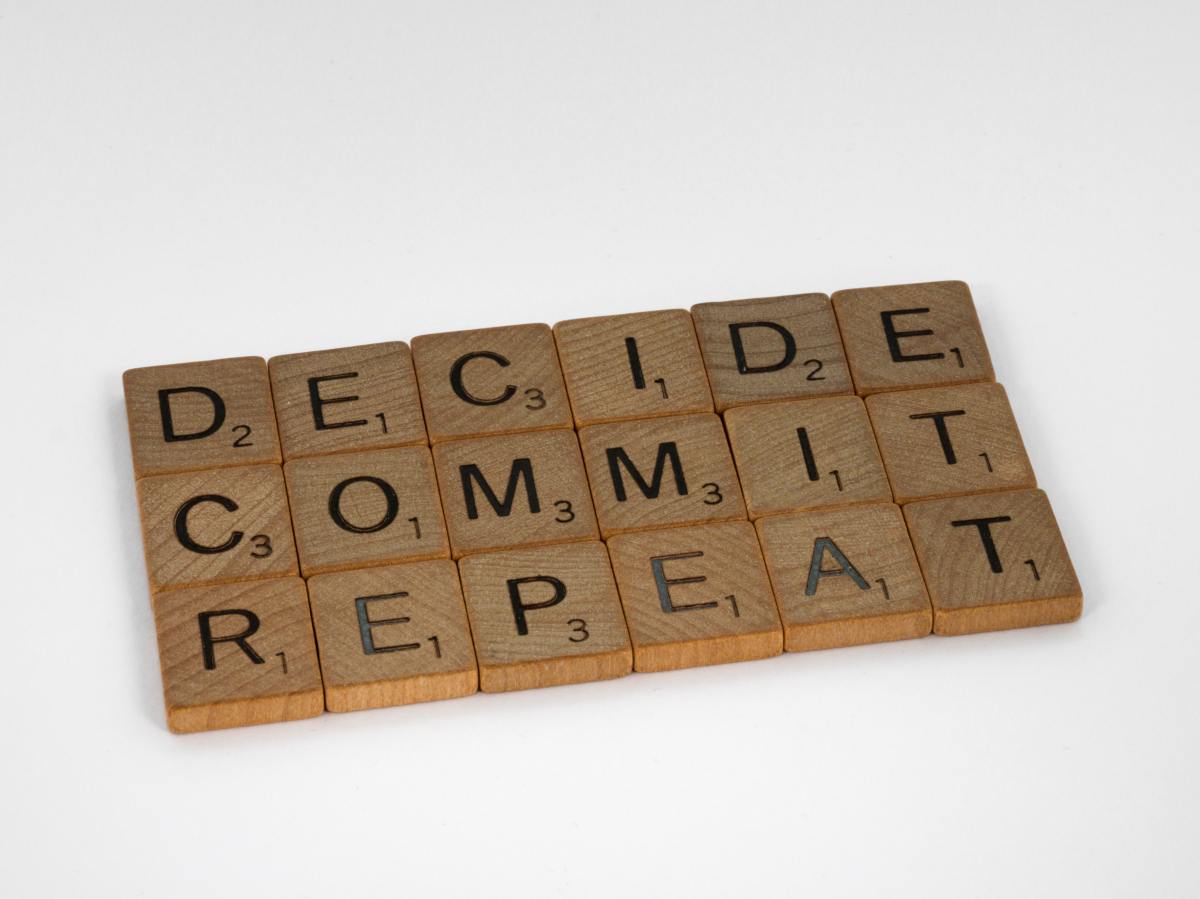
No decision is still a decision, and don’t let Analysis Paralysis force the non-choice upon you by default!

Categories
Coaching Leadership

It Depends

A classic answer to a ‘simple’ question, “It Depends” is what you’ll often get back from an experienced person whenever you throw them something formulated as “What’s better, A or B?”.

It can feel very frustrating to get this answer back. Maybe you wanted a quick confirmation or to settle an argument by getting the support of someone more senior.

“It Depends” is an answer asking for more context. It’s rare that there’s something that’s always a slam-dunk good choice, and probably more so when it’s a topic that someone needs to ask for help on.

It’s especially common in tech circles, but any complex field will be familiar with this answer. Where there are lots of ways to approach a problem, and the context of the problem tend to really matter, then you will find out that it really depends.

So, what can you do in this situation?

First up, accept it. You’ll hit the “It Depends” answer every so often, so be prepared to meet that request for extra context. A good experienced person may ask some immediate follow-up queries to get the context they’ve invited, but you can start to give it if you aren’t asked. “Okay, well, I’ve tried X & Y. My constraints are C, D & E. I need something that works well enough for this scale before the end of the month.”

Give the context, and you’ll get to a more useful answer from your available options.

The other approach is to go in with context, and rather than asking if “A or B is better”, you can ask “with this information, what could we try?”. Recognise that you get an “It Depends” answer by giving a blind choice, and step around it with some preparation. Who knows, by thinking about the context in more detail, you might just find the answer without any support!

So don’t get frustrated with “It Depends”, there really aren’t simple answers in complex spaces. Instead, recognise it as a request for more context, and build that shared pool of meaning to get to a good answer.

Categories
Coaching Leadership

Decisions, decisions

A really fast way to fail is to stop being able to make decisions. It manifests in lots of ways in an organisation, from tiny things needing multiple sign-offs, through to people chasing just “one more data point” before committing to doing something.

If you aren’t shipping you are losing, and if you aren’t making decisions, then you certainly aren’t shipping anything.

So how to fight against this and keep moving forwards?

Don’t sweat the small stuff – Do some due diligence on the big spend, but just let people do something small without major chains of approval. If you can’t change that process, then do whatever you can to make it easier for people. Try to say ‘yes’ wherever you can if it’s not going to break the bank.

Measure reality – Hypothesis and theories are great to point us in a direction, but the truth is found out in the world. Figure out the fastest way to get to measuring real behaviour, implement that and then iterate on the results you get. The majority of value in your analysis comes from the early effort, get enough confidence to try something and then go from there.

Reduce the risk – Don’t do a big bang release, instead roll-out to a few customers before ramping up over time. Test a solution with a few simple cases to see that it solves them before investing in solving every possible thing. Turn decisions into two-way doors so you can undo them if it doesn’t go well.

Sometimes you have to put the effort in, do the due diligence and make sure that you have everything that you could possibly need lined up and covered off before you make a decision.

That’s really rare! Don’t let it become the default or the gears will stop turning and you’ll never progress.

Use the techniques above to keep moving, keep learning and you’ll keep on delivering massive value!

Categories
Coaching Leadership

Timeboxing Exploration

It’s easy to fall into the trap of Analysis Paralysis. One more bit of data, a couple more answers to a survey, the feelings of that final stakeholder.

Whenever we are in an uncertain time, you can think that it’s best to get to certainty before trying to act.

It’s a false premise, fight that urge.

Most of the information that you need to make a decision will be easy to gather, and the last few pieces will be a lot more expensive and probably less valuable.

So instead, set aside a timebox to do this exploration and to gather information. I find it works best if you are clear about what you are trying to learn, what the decision is you are trying to make, and also honest about what you know now.

By making decisions based on a fixed amount of data collection, you can move on to actually seeing how the analysis you’ve done holds up in the real world, and start on any course corrections early.

Pick shorter timeboxes for smaller decisions. If it’s low impact or low risk, don’t waste much time on it at all. If you are investing a couple of weeks work for the team, then spending a few hours to validate assumptions is great. Spend a couple of days on your plans for the quarter, and a week or two to set a annual strategy.

You need to be disciplined, and actually stop and make the decision once you hit the limit of the timebox. So start with the smaller activities to build confidence and go from there.

Once you’ve done the analysis, made the decision and implemented the outcome, then review the outcomes to see how you did.

The way to make good decisions is to make lots of them, to learn what went well and to do more of that. You get there by focusing your exploration time, learning the most important things, making that decision and doing it all over again!

Categories
Coaching Leadership

The Reframer

It’s time to make a decision. The meeting is scheduled, the agenda and pre-reading sent out well ahead of time. You sit down, do some introductions and dive in. You outline the problem, highlight the known constraints and list the options that are available to decide between.

Before you get any further, you are hit by the Reframer, a particularly specific weaponiser of the “What’s the problem?” question.

They challenge the framing of the problem, with the goal of either claiming it’s not something worth solving, or inserting their own favoured option into the pile to consider. It’s usually not a data-driven interjection, instead they “don’t believe” something, or don’t recognise it as something they’ve experienced.

You’ve got to stop the Reframer as swiftly as possible. Otherwise they’ll derail this meeting, drag you back to an earlier time and prevent any progress from being made.

To keep moving forwards, apply the following approach:

  1. Thank them for the contribution
  2. Note that the concern has been covered in pre-reading or is out of scope of the current conversation
  3. Offer to return to the issue later if it’s not settled in the ongoing conversation
  4. Move on to your next planned step

Depending on the exact attempt at reframing, you might need to go heavier at one point or another to be able to move on. If the concern is covered in previously provided data, then highlight that. If it’s totally separated from the decision to be made, then make the offer to return very light.

If the Reframer won’t let it go, then put it in the Parking Lot. Write down whatever they raised, put it somewhere visible and record it in meeting notes. If all they want is to be heard, then doing this will help keep you moving.

Don’t let Reframers drag you back, but keep on track and get to the decision you need to make.

Categories
Leadership

Setting the Framework

It’s easy to make bad decisions, and it can be hard to make good ones. Almost always, just making the decision, implementing the outcome and correcting as you go is better than getting stuck in Analysis Paralysis and doing nothing.

Given that making the decision is a good move, how can you improve your chances of making a good one, and getting everyone bought in to that choice. We’ll tackle this from the point of view of a business decision, but you can use these approaches in any situation.

First off, get super clear about the scope and parameters of the decision. Create a statement of the problem, one that’s got enough detail to show whether the decision made successfully solved the issue.

So rather than “We need to do something about this”, prefer “We need to decide with investment option has the best chance of returning 3x on its investment inside 18 months”. Once you’ve got this, put together your options. What could you do to solve this problem? What are the pros and cons of each approach, where are the risks?

Now you are ready to take these forwards to make a decision. Get the smallest possible group with the authority to make the call, covering the groups who will be impacted by the decision. Review the problem statement, discuss the options, weigh up the tradeoffs and pick a course.

The outcome of the final conversation needs to be documented and communicated. The process should be made as visible as possible to show how the decision was made, and the outcome tracked to show how successful it was.

For a big decision, each of these stages can be a separate meeting. That allows you to bring in experts when putting together options, while keeping the decision making group small. For smaller decisions, you can use a single meeting, but make sure to split the phases of the meeting clearly. For some groups you’ll need a strong facilitator to keep the conversation moving, especially those that keep circling back to options multiple times. If that happens, don’t be afraid to pause, and regroup in a separate session.

There’s lots more reading to do about effective decision making, from traps to avoid, to emotional connections and much more, but following this simple framework and you’ll see an immediate improvement:

  1. Clearly state the problem that requires a decision
  2. Outline options with pros, cons and risks
  3. Convene a small group with authority, and make a choice
  4. Communicate the decision
  5. Measure the outcome
Categories
Book Review

Thinking, Fast and Slow

Daniel Kahneman’s Thinking, Fast and Slow is the starting point for anyone who wants to stop and really learn about how we think and make decisions. It’s an incredibly information rich book, it’s certainly not an easy read but it is most definitely a worth while one.

It collects decades of research into how we make decisions, how we consider risk and gain and how we use shortcuts that are sometimes great but can often be terrible.

It starts by discussing System 1 and System 2, two models of thought. System 1 is the hasty and instinctual prone to taking shortcuts and making lazy decisions. System 2 is the more rational, willing to spend effort to make important decisions. Kahneman discusses the differences between these two modes, and shows us when System 1 can make good decisions, and where it can fall down.

We then move on to thinking about Humans and Econs. Traditional economic theory suggests that people always make rational decisions. Kahneman shows us times we may not behave rationally, when we are Humans and not the Econs of rational theory.

Finally, he discusses the differences between the remembering self and experiencing self. In this approach, we see that people are often willing to experience greater overall discomfort if the end of it is more pleasant. We remember the end of the experience more clearly, or we recall the peaks more than the average. It’s a surprising insight.

The book is brilliantly researched, each insight is backed up with rock solid studies that are brilliantly footnoted. Every chapter covers one of these major insights, compressed down into less than a dozen pages. There are regular ‘Speaking of’ sections that give great short practical views into each of the complex topics.

Take the time to drink this book in. Don’t rush through it, but do rush to buy it!